Clos Sainte-Hune, Alsace legend. Home to the most famous single-vineyard wine in the Alsace region, Clos Sainte-Hune delights wine lovers all over the world. For a century, the Trimbach family has lovingly tended this treasure, determined to make it shine ever brighter
Since 2023, Trimbach, the great house of Ribeauvillé, has been undergoing a transformation with a new generation at the helm. Anne and Frédérique, the children of Pierre Trimbach, work alongside Pauline and Julien, the children of Jean Trimbach. Each has a specific role, spanning winemaking, marketing, sales and communications.
The wines are now certified organic, both those produced from the 70 hectares under cultivation and those made from purchased grapes. These changes do not prevent the estate from remaining true to its traditions, which are still upheld, just as the hierarchy of the range is maintained, at the pinnacle of which the legendary Clos Sainte-Hune wine has reigned majestically for over a century.
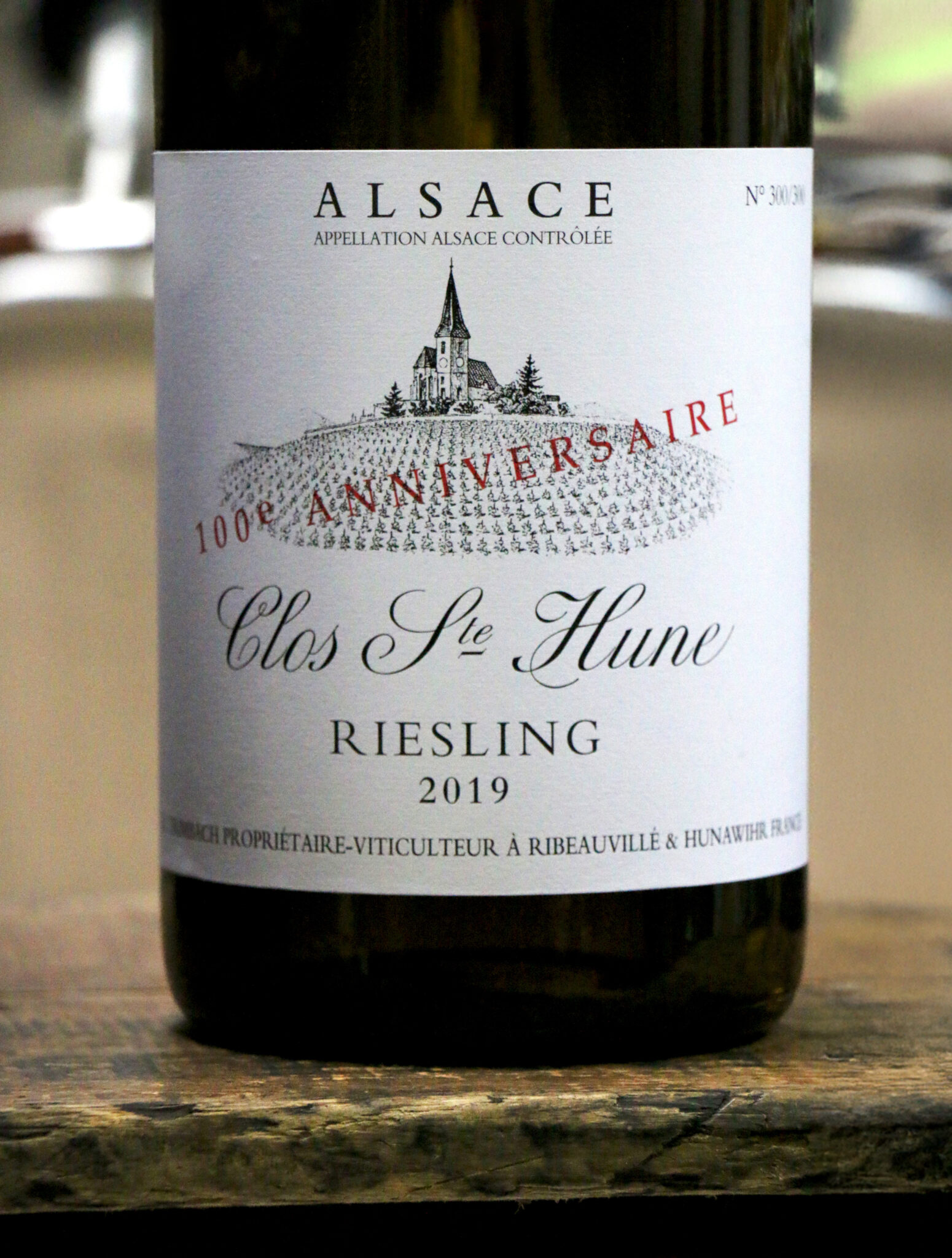
To mark the release of the historic 2019 vintage, the estate also celebrated the centenary of its legendary 1919 cuvée. This iconic wine was the first to bear this name, symbolising a milestone in the estate’s history. It originates from a vineyard cultivated since near time immemorial, with roots tracing back to the Roman introduction of vines in Alsace.
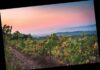
Covering a modest area (1.67 hectares on a gentle south-easterly slope, at the heart of the 26.18-hectare Rosacker grand cru), the Clos Sainte-Hune overlooks the village of Hunawihr and its famous 15th-century mixed-use church. Its old Riesling vines are rooted in calcareous-magnesian Muschelkalk soils—literally “shell limestone”—which provide excellent water retention and contribute to the wine’s remarkable consistency. This natural balance allows the vineyard to produce wines of steady quality, even across varying vintages. As Julien Trimbach notes, “Sainte-Hune isn’t necessarily the greatest wine in Alsace every year, but its consistency is the hallmark of a great wine.”
With bedrock outcrops at the top of the vineyard, minerality is a defining feature of every vintage. This sensation, which only intensifies with time, has long helped to balance the residual sugars sometimes found in wines from 20th-century vintages, whilst lengthening the finish. The estate divides the vineyard into four or five plots, all harvested by hand. The youngest vines are now around forty years old, and the oldest were planted before the 1950s. Rare in the history of the cuvée, the 1989 and 1983 vintages gave rise to a production of late-harvest wines.
Pierre Trimbach recalls: ‘In 1983, it was intentional, but not in 1989. I remember it because I was in the vineyards and the vineyard produced only late-harvest wines that year. Some sections even had the potential for ‘sélections de grains nobles’, which we labelled as ‘VT hors choix’.” All the old vintages of this legendary Alsatian wine are re-corked when the house deems it necessary.
Clos Sainte-Hune 2019
Pale colour. A terpene-driven opening (noble terpenes) with a mineral intensity
that is already evident in the glass. Aeration reveals delicious aromas of candied lemon
and freshness, with a hint of passion fruit and some floral (iris) and spicy (white pepper) notes. Full of finesse and subtlety, it is a monument of verticality and tension, displaying the fleshiness characteristic of a highly ripe vintage, with roundness, even though it is a dry wine. A finish of great persistence, with a mellow acidity that adds extra length without any sharpness. It will live up to the reputation of this legendary wine and will undoubtedly reach perfection once it reaches its peak. 99/100
Clos Sainte-Hune 2009
White-gold colour. The nose is very sunny and powerful, with notes of candied fruit, and remains
in the citrus aromatic register, with hints of white fruit (Passe-Crassane pear) and exotic fruit (banana). The ripeness of the grapes is evident in the mouthfeel, which is creamy, rich and rounded, more monolithic than that of the 2019 vintage. 97/100
Clos Sainte-Hune 1979
A distinctly amber colour. It has reached maturity, with a mellow
and integrated acidity that contributes to its finesse and length on the palate. A few notes of noble fungi and undergrowth, with vegetal touches (dried leaves), lend it complexity and delicacy. It is now at the table, alongside fine and delicate dishes such as turbot in cream sauce, that it will reveal its full genius. 95/100
Clos Sainte-Hune 1976
A deep amber colour with light brown highlights. The opulent nose is immediately dominated by a very noble hint of menthol, with notes of lemon and lime upon aeration. A touch of botrytis at harvest has imparted a rich, velvety texture which, with time, delivers a surprising smoothness on the palate. This wine calls for rich sauces, paired with foie gras or mushrooms. A masterful achievement with a very persistent, mouth-watering finish where the acidity returns, betraying the defiant youthfulness of this wine, untouched by the years. 100/100
Clos Sainte-Hune 1971
A paler colour than the previous vintage, due to the perfectly healthy grapes of 1971. Less multi-dimensional and less opulent, it has other strengths, such as remarkable earthy nuances on the nose and palate (celery, white truffle). Delicate and refined, it is in food pairings that it will truly shine. A superb, invigorating and mouth-watering finish, where the acidity is elegantly present. 99/100
Clos Sainte-Hune 1967
Served at the gala dinner at the Auberge de l’Ill (two Michelin stars), with cuisine by the exacting Marc Haeberlin, this exceptional wine was a marvellous accompaniment to the pigeon tournedos with cabbage, foie gras and truffles. A great moment of tasting: the residual sugar from its youth has developed into texture, resulting today in a sweet wine, yet dry in flavour, balancing power and persistence. Its minerality complemented both the full-bodied sauce and the pigeon’s meat equally well. 100/100
Clos Sainte-Hune 1966
An atypical aromatic profile for the series, with fruitiness giving way to notes of spice (pepper), dried leaves and dry wood. The palate is vertical, still tight, with marked tension and a salivating acidity. A long-lasting Saint-Hune with great freshness. What youth! 98/100