This grape variety has specific requirements in terms of soil, slope, exposure and temperature. Yet it has found its expression all over the world. And it does everything asked of it, from dry to sweet. Strange, this Riesling, white wine for the world
Chardonnay has conquered the planet, and we can see why. A modern, cosmopolitan grape variety, it adapts to all climates, all styles, all trends, all tastes and all cuisines. It can even bring out the best in exceptional terroirs, but ultimately, when you eat a fully ripe grape, it expresses little beyond its sugar. It is therefore the fermentation process and human creative imagination that bring out its best.
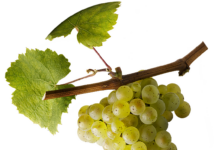
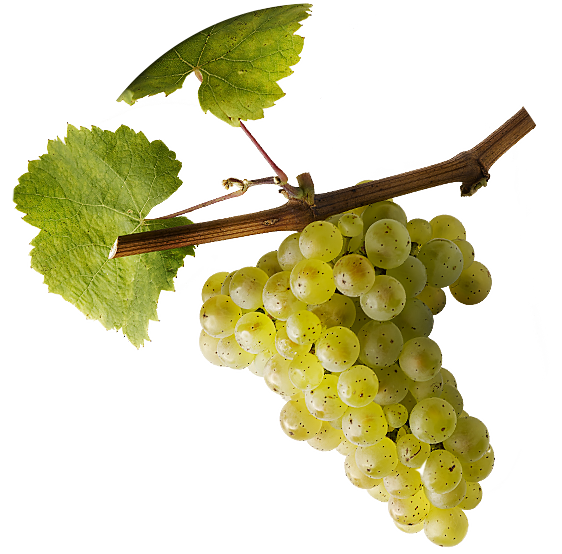
With Riesling, it is different; these small berries possess something unique in terms of fruitiness, freshness and subtlety in the aromatic and textural differences from one terroir to another, which I find truly incomparable. Stoltz, the great 19th-century ampelographer, a native of Andlau and owner of the Kastelberg estate, detected in the grape unique notes of cinnamon, bitter orange, pepper and clove – which are exactly what we taste today.
Aroma specialists recognise the presence of terpenic precursors here. Fermentation naturally accentuates these and produces molecules of linalool, nerol, geraniol and citronellol, somewhere between lemongrass and rose, which Riesling shares, incidentally, with Traminer and Muscat and which, when ageing in a reductive environment, without oxygen, as in the bottle, evolve towards hydrocarbons and the famous ‘petrol’ notes, particularly on terroirs rich in limestone fossils or minerals such as schist. If the skins containing these precursors are pressed too hard, or if the grapes are crushed too vigorously, this tendency is accentuated to the point of caricature and saturation.
As if by chance, genetics confirms this unique nature of the grape: the mystery of Riesling’s genetic origin has not yet been fully unravelled, but we are fairly certain it has strong links to Gouais Blanc, the mother of Chardonnay and aunt of Traminer, and thus a close connection to Furmint, Savagnin and Elbling from Luxembourg. This begins to shed light on the enigma of its establishment in Europe and allows us to admire Stoltz’s insights even more.
The word ‘Riesling’ only appears around 1435 in the Rheingau, but obviously the grape variety had existed for a long time. The first to plant vines in the Rhineland was Louis II, known as ‘the German’, around 840. Stoltz is convinced that this was already the ‘gentle aromatic’, which he refuses to call Riesling due to its origin, which he considered French; this is corroborated by the name of another very ancient grape variety from the Rheingau called Orleaner.
If one considers that the ancient Sauvignon of Château-Châlon before the French Revolution was undoubtedly already Savagnin or a form of Traminer, and that precise aromatic descriptions of a Sauvignon from the Vendôme region corresponded exactly to his vision of Riesling, there was a step that Stoltz happily skipped.
Until the truth comes to light, the current official version is that Riesling is probably a descendant of local Lambrusco varieties from the Rhine Valley, cross-pollinated by Gouais, which was also planted sparingly in the seigneurial or ecclesiastical vineyards of Alsace and, more widely and much later, throughout the 19th century, in the rest of Alsace and the German Moselle, in Central Europe, and then across the seas to South Africa, Australia and California.
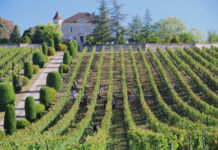
Everywhere, this highly demanding grape variety thrives only on well-drained soils, favouring steep slopes, flowering in cool weather and slow ripening, and tolerating hot continental summers provided the nights remain cool – conditions it naturally finds ideal at the northern limit of vine cultivation in Europe. Its skins are perfectly suited to botrytis if it develops on ripe grapes, which, in addition to a dry wine, allows for the production of fine sweet or syrupy wines, albeit in very small quantities.
As it is grown in a cold climate and harvested in late October or early November, the yeasts struggle and fermentation often stops before reaching 10% alcohol by volume, which explains the unique balance of German wines, further enhanced by winemakers who may also use sulphur dioxide (SO2) to prevent the alcohol content from exceeding 8%. The remaining sugar preserves the fruit and balances the high acidity.
In Alsace, and increasingly so in Germany and elsewhere, by reducing yields and taking risks to harvest late, grapes are obtained that can reach 13% natural alcohol or more and rival the greatest Chardonnays as fine dry wines for fine dining.
Despite the 3,400 hectares planted in Alsace and the efforts of passionate sommeliers and wine merchants, French wine lovers are often unaware of the value of the finest wines made from this grape variety, which they would nevertheless immediately embrace as a national treasure. They do not realise what they are missing out on.