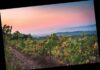
HHH Kanaan, a family affair in Ningxia. In the heart of China’s Gobi Desert, a father and daughter are defying the odds, crafting world-class wines in a most unexpected terroir. The story of Kanaan winery is a tale of family, ambition, and the rise of Ningxia. A prominent force in the global wine scene.
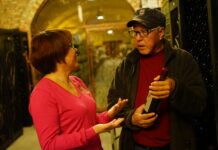
The story begins with Wang Fengyu, a retired administrator, who, seeking a fulfilling post-retirement activity, embarked on a journey into the world of wine. His daughter, Wang Fang, however, had developed a taste for international wines during her time living in Germany. Initially she showed little interest in her father’s endeavors. Despite their differing perspectives, their paths ultimately converged in Ningxia province. There they now operate their own wineries, side by side. Their story is one of contrasting approaches, familial dynamics, and the rise of Ningxia as a prominent force in the Chinese wine industry.
Wang Fengyu’s Helan Qingxue winery achieved international acclaim with its 2009 Jia Bei Lan, which won the Overall Bordeaux Blend Trophy at the 2014 Decanter World Wine Awards. This victory was a watershed moment, described by critic Ch’ng Poh Tiong as “breaking the glass ceiling” for Chinese wine. Wang Senior’s journey began with a vision to create premium wines in a small-scale, artisanal winery, a radical departure from the mass-produced, factory-style wines that dominated the Chinese market at the turn of the century. He aimed to produce a 1,000 RMB bottle. This goal that was met with widespread skepticism. His dedication to quality and meticulous vineyard management ultimately proved the naysayers wrong.

While her father was establishing his winery, Wang Fang was living in Germany, immersed in the world of European wines. It wasn’t until 2008, when her father showcased his wines at a fair in Stuttgart, that her perspective began to shift. Witnessing the genuine enthusiasm of German winemakers for the wines of Ningxia sparked a curiosity she hadn’t anticipated. This experience, coupled with her father’s unwavering belief in Ningxia’s potential, ignited her own interest in the region’s winemaking possibilities.
In 2010, during a visit to her father’s winery, Wang Fengyu presented her with an empty plot of land adjacent to his, a rugged landscape of desert, rock, and snow. He suggested she establish her own winery, a proposition that resonated with her newfound appreciation for Ningxia. Despite her initial reservations about the challenging environment, the seed was planted. “All I saw was desert, a bare mountain, with no trees, just rocks and some snow at the top,” she remembers. “I was born here but I was never very keen on the place. But that day, it got to me.” Inspired by her father’s success and driven by a desire to explore her own winemaking vision, she embarked on the journey that would lead to the creation of Kanaan.
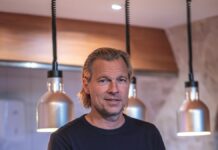
The dynamic between father and daughter is a central theme in the story of Kanaan, the family affair in Ningxia. Wang Fang, known as “Crazy Fang,” acknowledges inheriting her father’s adventurous spirit, but their approaches to winemaking often differ. “We still share the same faith,” she explains, “we believe Ningxia can produce good wine. We are quite different, but we’re both crazy.” Her German upbringing instilled in her a meticulous attention to detail and a strong work ethic. She describes her insistence on precision, whether it be vine spacing or vineyard cleanliness, which sometimes clashed with her father’s more relaxed approach.

While Wang Fang initially brought modern European viticultural techniques to Ningxia, she has come to appreciate the value of her father’s experience and deep understanding of the local terroir. She acknowledges the challenges of growing Riesling in the harsh desert climate, including the devastating loss of a harvest due to the medusa virus. “I thought my father was too old fashioned,” she admits, “but after 10 years, I know how difficult it is to plant Riesling in the Gobi desert.” She has also come to recognize the importance of her father’s emphasis on healthy vines, realizing that it is the foundation for both quality and sustainable yields. “He is old fashioned, but he knows how things stand, he understands nature,” she reflects.
“I am learning to be patient, not to push.”
Despite their differing perspectives, the Wangs have influenced each other’s winemaking philosophies. Wang Fang’s refined palate, developed through her exposure to a wider range of European wines, has led her to experiment with new varieties and styles, including a successful semi-sweet wine that initially met with her father’s skepticism. She has also brought a modern approach to marketing and communication, investing in strategic partnerships and listings in high-end establishments, complementing her father’s direct-to-consumer sales model.