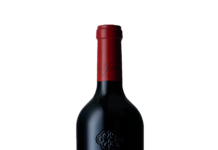
The story of Grace Vineyards is a distinctly modern Chinese narrative, one that
intertwines family legacy and entrepreneurial spirit, with dedication and patience.
THE TALE BEGAN IN 1997 with a father’s vision of a peaceful retirement amidst the vines and evolved into a thriving family business. Spearheaded by his daughter, Judy Chan was present even before the first bottle was ever corked.
Judy’s father, an entrepreneur with roots in Indochina, had a diverse background. He moved to China, studied in Inner Mongolia and Shanxi, and eventually settled in Hong Kong at the age of 24. He built his career as an agent for a French raw material company. The experience introduced him to the world of French wine. When the French owners retired, he considered investing in Burgundy, but ultimately decided to pursue his winemaking dream in China. He enlisted the help of a French wine expert. Judy stepped in to assist her father, marking the beginning of her journey into the world of wine.
Ironically, wine was not a significant part of Judy’s upbringing. “Dad did not drink at home,” she explains. “He liked wine for the ambiance, the mood associated with wine and good company. I never saw him drink and was surprised to find out he had a winery.” Despite this unfamiliarity, Judy embraced the challenge. Her father, a savvy businessman, adopted a hands-off approach, empowering her to learn and grow. “Dad and I did not know much,” she admits, “but Dad, as an entrepreneur was smart, very hands off: ‘you have a brain, use it. Just don’t do any irreversible mistakes’.” He provided guidance, but encouraged her to take ownership, shaping her into a leader capable of building a successful business.
The early years were challenging. The launch of their first vintage in 2002 coincided with the SARS outbreak in 2003, creating significant hurdles. Of the one million bottles produced, they only sold 20,000. Coming from neither a consumer business nor a wine-drinking background, the family faced a steep learning curve. However, they possessed several key advantages that proved crucial to their early success.
For the first five years, Judy’s father was actively involved in the business. Afterward, his role diminished, allowing him to enjoy the fruits of their labour. “For the first five years, Dad was very involved,” Judy recalls. Working alongside her father was a rewarding experience, fostering creativity and a willingness to experiment.
Judy’s personal journey also played a role in shaping Grace Vineyards. Born and raised in Hong Kong, she studied psychology in Michigan and worked at Goldman Sachs before joining the family business. She even studied feminism, an experience she feels has been beneficial in the wine industry. “It is tough for women in the wine industry. There are very few women, so they remember me; it is good for marketing.” She also points out that in China, age is often more significant than gender, and her youth has been an asset. Her psychology background, she believes, has given her valuable insights into consumer behaviour.
“Working with Dad was a great experience; It brought us together. I am the eldest, so I got the chance to work with him. And it was fun.”
Building a successful winery requires dedication, patience, and a commitment to continuous improvement. Judy emphasises the importance of hiring skilled professionals, including their current Malaysian winemaker, who previously served as a translator for their Australian winemaker, and their COO, who started out as her father’s driver. “We all started young and naive but all stuck around,” she says. “After 27 years, the wines still improve,” Judy states. “It takes 10 years to get a new wine out. We continue to do things to make the wine better.”
While Grace Vineyards has expanded into whisky and gin, their primary focus remains on wine production for the domestic market. They have intentionally minimised exports, believing that the challenges of competing with established wine regions are too significant.
Their key distribution channels in China include distributors for on-trade and off-trade sales, as well as direct-to-consumer sales through e-commerce, which now accounts for 10% of their business and is a growing area of focus. “We are investing heavily to develop in China,” Judy says, “a market accessible thanks to social media and people being tied together.” The evolution of e-commerce in China has also streamlined their operations. “2004-05, one had to open shops, had to deposit cash in the banks,” she recalls. “Today, everything is done via transfer.”
Grace Vineyards currently sells 1.2 million bottles annually and intends to maintain this level of production, with 95% of sales occurring in mainland China. Their focus is on refining their product line, introducing new varieties like Sangiovese, of which they are currently the sole producer in China. They are also adapting to the evolving Chinese market, recognising the shift from large hotel groups to smaller, social restaurants as key sales avenues. “The market is more mature,” Judy concludes, highlighting the changing landscape of the Chinese wine industry and Grace Vineyards’ commitment to staying at the forefront.